What Is a Boring Operation on a CNC Machine? Everything You Need to Know

What Is a Boring Operation on a CNC Machine? Everything You Need to Know
In the world of CNC machining, boring is a highly precise operation used to enlarge existing holes to tight tolerances and superior finishes. Whether you're working in aerospace, automotive, or mold-making, boring operations on a CNC machine play a crucial role in achieving precise internal diameters.
🔧 What Is a Boring Operation?
Boring is a machining process used to enlarge an existing hole, typically made by a drill or cast in a part. It improves accuracy, roundness, and surface finish, often achieving tolerances in the range of microns.
🔍 CNC Boring Definition: A subtractive machining process that uses a single-point cutting tool or boring head to precisely widen a pre-drilled hole.
🛠️ CNC Machines Used for Boring
Boring can be performed on several types of CNC machines:
1. CNC Milling Machines
- Most common setup for boring
- Uses boring bars or heads mounted in the spindle
- Can bore in X, Y, or Z axis, depending on machine orientation
2. CNC Turning Centers / Lathes
- Used when boring along the Z-axis (in-line with spindle)
- Ideal for cylindrical parts like shafts, hubs, and bushings
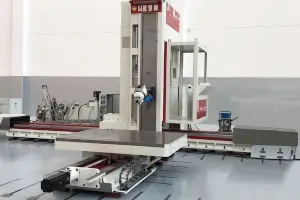
3. CNC Horizontal Boring Mills
- Heavy-duty machines used for boring large parts (e.g., engine blocks)
- Provide horizontal spindle movement and large work envelopes
4. Multi-Axis CNC Machines (5-Axis)
- Used for complex bore locations or angled holes
- Improves efficiency and eliminates the need for multiple setups
🔍 Types of CNC Boring Tools
- Single-Point Boring Bars: Basic and common; tool advances axially into the hole
- Boring Heads: Adjustable heads for fine-tuning bore diameter
- Twin-Bore Tools: For larger diameters, faster material removal
- Digital Boring Heads: High-precision with electronic adjustments
🧩 Key Considerations in CNC Boring
1. Tool Rigidity
Boring bars must resist deflection. Long overhangs increase the risk of chatter and inaccuracy.
2. Spindle Speed & Feed Rate
Improper settings can cause poor surface finish, tool wear, or even part damage.
3. Hole Entry Conditions
Drilled holes should be slightly undersized to allow proper boring engagement.
4. Coolant Application
Coolant helps reduce heat, extend tool life, and flush chips from the bore.
5. Chip Evacuation
Chip build-up inside a bore can cause re-cutting, surface damage, and tool wear.
⚠️ Common Issues in CNC Boring
| Problem | Cause | Solution |
|---|---|---|
| Chatter | Tool deflection or spindle instability | Use shorter, more rigid boring bars |
| Poor Surface Finish | Incorrect feed or dull tool | Adjust feed/speed, use sharper inserts |
| Oversized Holes | Tool wear or thermal expansion | Regularly inspect tools and control coolant flow |
| Tapered Holes | Misalignment or tool wear | Verify machine alignment and tool condition |
🏁 Applications of CNC Boring
- Engine cylinder bores
- Hydraulic valve bodies
- Gearbox housings
- Aerospace structural components
- Injection mold cavities
📐 Tolerances & Finishing
Boring operations can achieve:
- Tolerances as tight as ±0.0002" (±5 microns)
- Surface finishes up to 16 µin or better, depending on tooling and speed
✅ Best Practices for CNC Boring
- Always pre-drill holes 0.1–0.5 mm smaller than final bore
- Use high-rigidity holders and balanced tools
- Apply precision boring heads for fine finishes and tight tolerances
- Optimize your speeds and feeds based on material and tool diameter
- Test run new programs in simulation to avoid crashes or overcuts
🔚 Conclusion: Boring Is Precision-Driven Machining
CNC boring is not just "enlarging a hole"—it's a critical finishing operation that demands accuracy, stability, and proper planning. Whether you're machining precision engine blocks or complex aerospace housings, boring plays a vital role in quality assurance.
Understanding the right tools, machines, and techniques is the key to mastering boring operations and achieving perfect internal diameters every time.