
Building a High-Performance CNC Shop Layout for 2027: Space Planning, Workflow Optimization, and Future-Proofing Tips

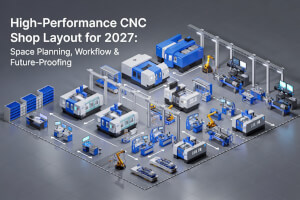
Building a High-Performance CNC Shop Layout for 2027: Space Planning, Workflow Optimization, and Future-Proofing Tips
As we approach 2027, CNC machine shops face intensifying pressures: skilled labor shortages, demands for faster turnaround, higher precision, and seamless integration of automation and Industry 4.0 technologies. A well-designed shop layout is no longer a nice-to-have — it's a strategic competitive advantage that directly impacts throughput, safety, scalability, and profitability.
Why Shop Layout Matters in 2027
A poor layout can waste 20-40% of potential productivity through unnecessary material handling, bottlenecks, and downtime. Conversely, optimized designs improve Overall Equipment Effectiveness (OEE) by 15-30%, reduce lead times, and lower operating costs.
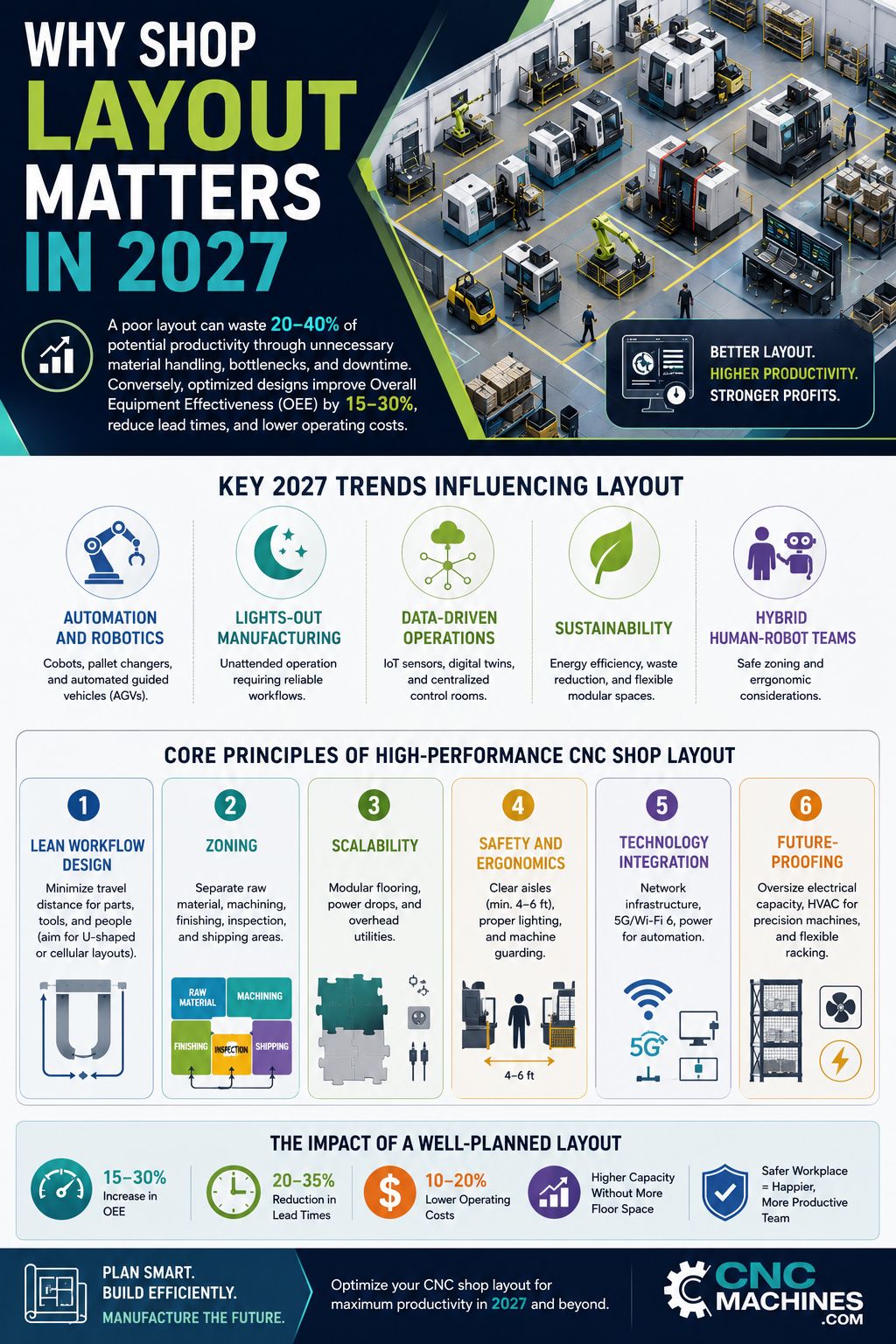
Key 2027 trends influencing layout:
- Automation and Robotics: Cobots, pallet changers, and automated guided vehicles (AGVs).
- Lights-Out Manufacturing: Unattended operation requiring reliable workflows.
- Data-Driven Operations: IoT sensors, digital twins, and centralized control rooms.
- Sustainability: Energy efficiency, waste reduction, and flexible modular spaces.
- Hybrid Human-Robot Teams: Safe zoning and ergonomic considerations.
Core Principles of High-Performance CNC Shop Layout
- Lean Workflow Design — Minimize travel distance for parts, tools, and people (aim for U-shaped or cellular layouts).
- Zoning — Separate raw material, machining, finishing, inspection, and shipping areas.
- Scalability — Modular flooring, power drops, and overhead utilities.
- Safety and Ergonomics — Clear aisles (min. 4-6 ft), proper lighting, and machine guarding.
- Technology Integration — Network infrastructure, 5G/Wi-Fi 6, power for automation.
- Future-Proofing — Oversize electrical capacity, HVAC for precision machines, and flexible racking.
Space Planning Basics
Allocate ~150-300 sq ft per machine depending on size and automation. Plan for 20-30% growth buffer. Use simulation software (e.g., FlexSim, Visio, or CAD-integrated tools) for virtual modeling.
Workflow Optimization Strategies
- One-Piece Flow vs. Batch: For high-mix: cellular layouts. For high-volume: linear or U-flow.
- Material Handling: Conveyors, AGVs, or overhead cranes for heavy parts.
- Tool Management: Centralized presetting and vending machines near high-use areas.
- Quality Control: In-line inspection stations to catch issues early.
- Digital Integration: Paperless systems with MES/ERP terminals at every station.
Industry-Specific Layout Examples
Aerospace CNC Shop
- Machine Types: 5-axis VMCs/HMCs, large gantry mills, multi-axis lathes.
- Layout Tips: Dedicated temperature-controlled zones, isolated cells for different materials.
Automotive / EV Component Shops
- Machine Types: HMCs for engine blocks, 5-axis for EV battery housings.
- Layout Tips: U-shaped high-volume lines with automated transfer zones.
General Job Shops
- Machine Types: Mix of 3/4/5-axis VMCs, turning centers.
- Layout Tips: Cellular manufacturing grouped by process, central tool crib.
Machine-Type Specific Planning
Consideration for each type, including VMCs, HMCs, and 5-axis machines, should include proper arrangement and ensuring space for additional equipment like chip conveyors.
Future-Proofing Your CNC Shop for 2027 and Beyond
- Electrical and Utility Infrastructure
- Automation Readiness
- Data Backbone
- Sustainability
- Modular Design
- Scalable Software
Implementation Roadmap
Plan in phases starting with assessment, design, execution, and optimization. Consider budget requirements and potential for ROI.
Case Studies and Real Results
- Midwest job shop: Lead time cut 45%, OEE up 28%.
- Aerospace facility: Reduced thermal scrap by 60%.
- Automotive supplier: Increased output 35% with existing footprint.
Common Pitfalls to Avoid
Avoid underestimating utility needs, ignoring human factors, and overlooking layout flexibility for future changes.
Conclusion: Position Your Shop for 2027 Success
A high-performance CNC shop layout is key to future success. Prioritize smart space planning and continuous adaptation to thrive.