Reducing Tooling Costs in 2026: Proven Strategies for CNC Shops


Reducing Tooling Costs in 2026: Proven Strategies That Actually Work for CNC Shops
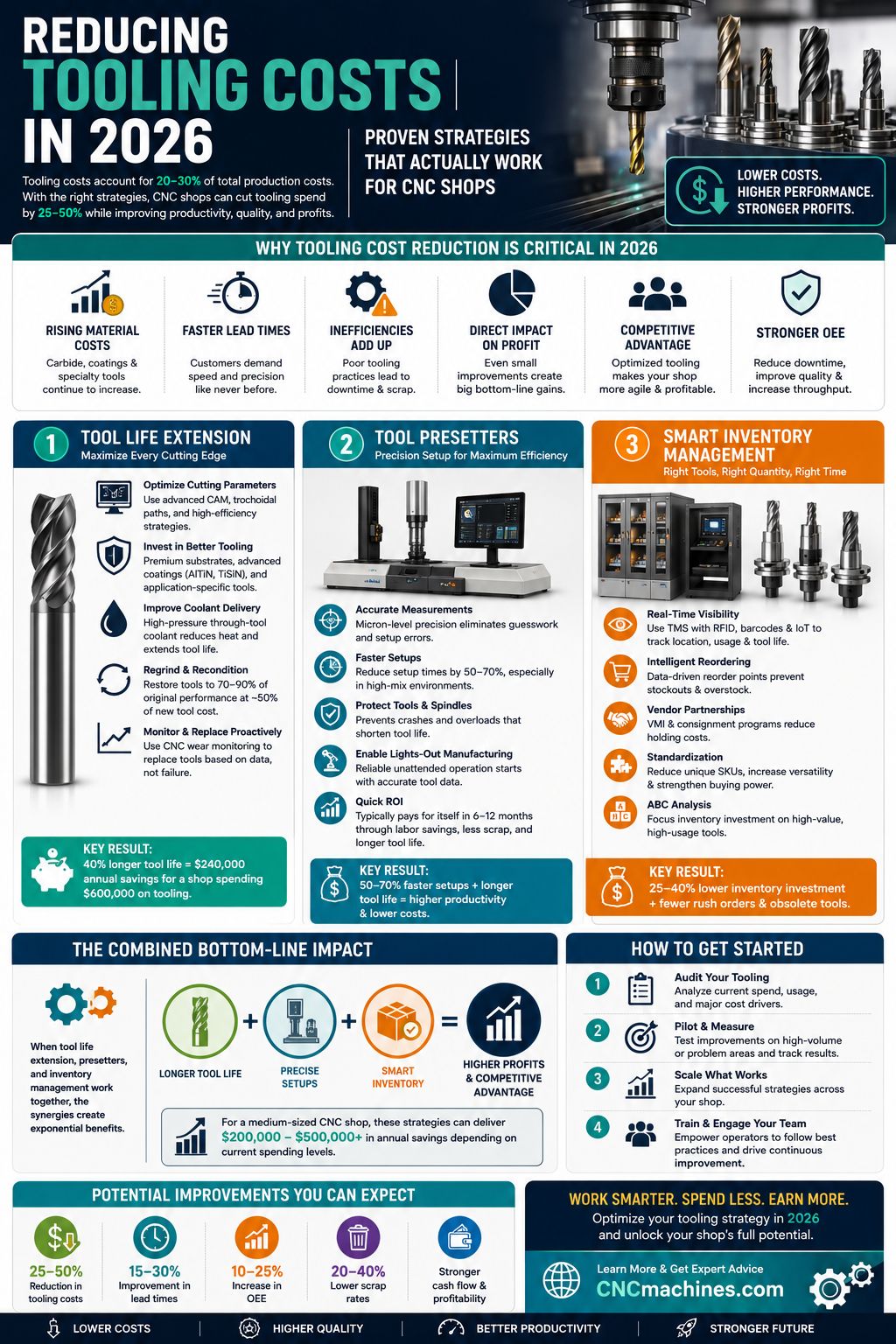
In the competitive manufacturing environment of 2026, reducing tooling costs remains one of the most effective ways for CNC machine shops to boost profitability without sacrificing quality or delivery performance. Tooling expenses often account for 20-30% of total production costs, and with fluctuating material prices, supply chain uncertainties, and rising demand for precision components, even modest improvements can significantly impact your bottom line. This comprehensive guide explores practical, high-ROI strategies focused on tool life extension, tool presetters, and smart inventory management — approaches that deliver measurable results for job shops, aerospace manufacturers, automotive suppliers, and medical device producers alike.
Why Tooling Cost Reduction Is Critical in 2026
Rising costs for carbide, advanced coatings, and specialty tools have put pressure on margins across the industry. At the same time, customers demand faster lead times and tighter tolerances, making inefficient tooling practices unsustainable. Shops that master tooling optimization not only lower direct costs but also enjoy secondary benefits like reduced machine downtime, improved part quality, and greater operational flexibility.
Tool Life Extension: Maximize Every Cutting Edge
Tool life extension forms the foundation of any successful cost-reduction initiative. Instead of viewing tools as consumables, top-performing shops treat them as strategic assets to be optimized throughout their usable life.
One of the most impactful methods involves advanced cutting parameter optimization. Using modern CAM software with simulation and verification features, programmers can develop high-efficiency toolpaths — such as trochoidal or dynamic milling — that minimize tool stress while maintaining aggressive material removal rates. These techniques often extend tool life by 50% or more compared to conventional approaches, particularly when machining challenging materials like titanium, Inconel, or hardened steels common in aerospace and medical work.
Complementing smart programming are advancements in tool technology itself. Premium substrates paired with nano-layered coatings (AlTiN, TiSiN, or diamond-like) resist wear and heat far better than standard options. Shops that invest in application-specific tooling and cryogenic treatment processes frequently see dramatic gains. Proper coolant delivery, including high-pressure through-tool systems, further enhances performance by reducing thermal shock and evacuating chips effectively.
Tool Presetters: Precision Setup for Maximum Efficiency
Tool presetters have evolved from luxury items to essential equipment in modern CNC environments. By measuring tool dimensions offline with micron-level accuracy, presetters eliminate guesswork during setup and dramatically reduce the risk of costly errors.
In 2026, leading optical and laser-based systems integrate directly with machine controls and tool management software, automatically populating offset data and reducing setup times by 50-70%. This is particularly valuable for high-mix operations where frequent tool changes are the norm. Beyond time savings, accurate presetting prevents overload conditions that prematurely wear tools, contributing to longer life and more consistent part quality.
Smart Inventory Management: Eliminate Waste and Optimize Stock
Poor inventory management silently erodes profits through excess carrying costs, obsolete stock, and emergency rush orders. In contrast, data-driven approaches maintain the right tools in the right quantities at the right time.
Modern tool management systems (TMS) use RFID, barcoding, and IoT connectivity to provide real-time visibility into tool location, usage, and remaining life. These platforms analyze historical data alongside current production schedules to set intelligent reorder points and quantities. Many shops implement vendor-managed inventory (VMI) or consignment programs that shift holding costs to suppliers while ensuring availability.
The Combined Bottom-Line Impact
When tool life extension, presetters, and inventory management work together, the synergies create exponential benefits. Reduced consumption means less frequent purchasing. Accurate setup extends tool life further. Better inventory visibility supports optimized processes.
For a medium-sized CNC shop, these strategies can easily deliver $200,000 to $500,000+ in annual savings, depending on current spending levels. Additional gains from higher machine utilization, lower scrap rates, and improved on-time delivery often double or triple the direct tooling cost reductions.
Looking Ahead: The Future of Tooling Cost Management
As we move through 2026 and into 2027, AI-powered optimization, more sophisticated sensors, and tighter integration between CAM, presetters, and machine controls will make these strategies even more powerful. Shops that adopt them now will be best positioned to handle increasing complexity while maintaining healthy margins.