

Unlocking America’s Hidden CNC Capacity to Boost Manufacturing Output
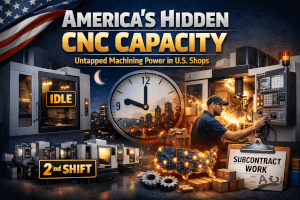
America’s Hidden CNC Capacity: The Untapped Machining Power Sitting Idle Across U.S. Shops
America’s manufacturing sector is often described as constrained by limited capacity, labor shortages, and rising demand for precision components. However, behind the scenes, a different reality unfolds — thousands of CNC machines across the United States sit idle for significant portions of the day. This overlooked opportunity is what we call America’s Hidden CNC Capacity, referring to the unused machining capabilities already installed in shops nationwide that could significantly expand domestic manufacturing output without building a single new factory.
The Myth of Full Manufacturing Capacity
When manufacturers discuss production constraints, the conversation usually centers on:
- Labor shortages
- Long lead times on new CNC machines
- Supply chain disruptions
- Increasing global demand
While these are real challenges, they often obscure a critical fact: Most CNC machines are not running 24 hours a day. In fact, most American machine shops operate on a single shift schedule, typically running machines between 8–10 hours per day. This means the same equipment sits idle for 14–16 hours every day.
Estimating America’s Idle CNC Machines
Industry data and marketplace insights suggest a staggering figure across the United States, with an estimated:
- 150,000 – 250,000 CNC machine tools actively installed in production environments
- Many include vertical machining centers, horizontal machining centers, CNC lathes, and multi-axis mills
If even 30–40% of these machines sit idle for half the day, the untapped capacity is massive. A simplified estimate suggests tens of thousands of CNC machines are available but unused during second and third shifts. This holds the promise for American manufacturers to greatly increase output without waiting for new machine tool deliveries.
The Second Shift Opportunity
One immediate way to unlock hidden CNC capacity is through second shift production. For many shops, expanding into a second shift could double production capacity overnight. Despite concerns around skilled labor, management oversight, and quality control during off-hours, shops that successfully implement second shifts often find significant benefits.
Subcontract Overflow: A Growing Trend
An important driver of hidden CNC capacity utilization is subcontract overflow work. Large manufacturers often rely on networks of trusted machine shops to absorb overflow work during periods of exceeded internal production capacity, maintaining production schedules and increasing supply chain resilience.
Why So Much CNC Capacity Goes Unused
Several factors contribute to idle CNC machines across the country:
- Demand Fluctuations: Shifts in manufacturing demand leave machines underutilized during slower periods.
- Skilled Labor Shortages: Finding qualified CNC programmers, machinists, and setup technicians is challenging.
- Sales and Marketing Limitations: Many shops lack consistent inbound work, limiting machine utilization.
- Capital Risk: Running additional shifts requires commitments some shop owners prefer to avoid.
Why Hidden CNC Capacity Matters
Unlocking this capacity is crucial for:
- Strengthening Domestic Supply Chains: Reduces reliance on overseas production and shortens lead times.
- Supporting Reshoring Efforts: Essential for industries bringing production back to the U.S.
- National Security Implications: Critical for industries like aerospace and defense, ensuring rapid response capability during emergencies.
The Role of CNC Networks
Digital CNC networks and marketplaces are connecting available machines with manufacturers who need them, solving the problem of underutilized capacity across regions.
The Future of American Manufacturing Capacity
The future may not depend solely on building more factories, but on fully utilizing already installed CNC machines. By expanding second shifts, improving subcontract networks, and activating idle machines, the vast potential of U.S. manufacturing can be unleashed, turning America’s hidden CNC capacity into a powerhouse of domestic production.

