
What is a Lathe? Understanding Its Uses, Types, and Evolution

What is a Lathe? Understanding Its Uses, Types, and Evolution
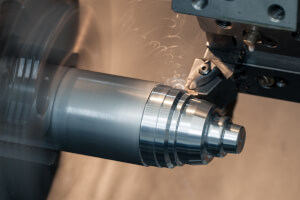
A lathe is a versatile machine tool that has been fundamental in metalworking, woodworking, and manufacturing for centuries. At its core, a lathe operates by rotating a workpiece about an axis of rotation while various tools are applied to the workpiece to shape it. Lathes are essential for producing cylindrical parts, but they can also create intricate designs, threads, and more. With advancements in technology, lathes have evolved from manual machines to highly sophisticated CNC (Computer Numerical Control) systems, making them indispensable in modern manufacturing.
What is a Lathe Used For?
Lathes are used for a wide range of applications across various industries. Here are some of the primary uses of a lathe:
- Turning: The most basic operation performed on a lathe, turning involves removing material from the outside of a workpiece to create a smooth, cylindrical shape.
- Facing: This process involves cutting the end of the workpiece to create a flat surface perpendicular to its axis.
- Threading: Lathes can cut external or internal threads on a workpiece, allowing it to mate with other threaded components.
- Drilling: A lathe can drill precise holes in the center of a rotating workpiece using a stationary drill bit.
- Boring: This operation enlarges an existing hole or creates internal cylindrical surfaces.
- Parting: Parting is the process of cutting off a section of the workpiece after it has been machined to the desired length.
- Knurling: Lathes can create a textured pattern on the surface of a workpiece, often used for grips on tools or handles.
The First CNC Lathe
The concept of CNC lathes was born in the mid-20th century when engineers sought to automate the lathe's functions for increased precision and efficiency. The first CNC lathe was developed in the 1950s at the Massachusetts Institute of Technology (MIT). It was based on the principles of numerical control (NC) where machine operations were controlled by punched tape. This early CNC lathe paved the way for modern computer-controlled lathes that are now integral to industries like aerospace, automotive, and electronics.
What is the Difference Between a Turret Lathe and a Swiss Lathe?
Turret lathes and Swiss lathes are two specialized types of lathes designed for high-precision work, but they differ significantly in design and application:
Turret Lathe
- Design: A turret lathe features a turret that holds multiple cutting tools. The turret can rotate to bring different tools into position, allowing for quick tool changes without needing to reset the workpiece.
- Use: Turret lathes are ideal for mass production of parts where multiple operations need to be performed in sequence. They are commonly used in the manufacturing of components such as nuts, bolts, and other hardware.
- Advantages: Turret lathes excel in high-volume production due to their ability to perform multiple operations quickly and efficiently.
Swiss Lathe
- Design: Swiss lathes, also known as Swiss-type or sliding headstock lathes, hold the workpiece in a collet and feed it through a guide bushing close to the cutting tool. This design minimizes deflection and allows for the production of extremely precise parts.
- Use: Swiss lathes are often used in industries requiring high-precision components, such as watchmaking, medical devices, and electronics.
- Advantages: Swiss lathes are renowned for their ability to produce small, intricate parts with exceptional precision.
What is a 3-Axis Lathe?
A 3-axis lathe refers to a lathe that can move the cutting tool along three axes: X, Y, and Z. In traditional lathes, the workpiece rotates along the Z-axis, and the cutting tool moves along the X and Y axes to shape the workpiece. A 3-axis lathe allows for more complex geometries to be machined in a single setup, enhancing efficiency and precision. These lathes are commonly used in industries requiring intricate shapes and fine details, such as aerospace, automotive, and precision engineering.
What is a Chucker Lathe?
A chucker lathe, also known simply as a chucking lathe, is a type of lathe that does not use a tailstock. Instead, it uses a chuck to hold the workpiece securely in place. Chucker lathes are typically used for shorter workpieces that do not require support from a tailstock. These lathes are ideal for producing parts with complex shapes or features that require multiple tool changes. Chucker lathes are often found in production environments where flexibility and speed are crucial.
What is a Swing Section on a Lathe?
The "swing" of a lathe refers to the maximum diameter of the workpiece that can be rotated on the lathe without hitting the bed. The swing is typically measured from the center of the spindle to the bed, then doubled to give the maximum workpiece diameter. The swing section of a lathe determines the size of the workpieces that the lathe can handle. For example, a lathe with a 10-inch swing can accommodate workpieces up to 10 inches in diameter.
Conclusion
Lathes are fundamental tools in the world of manufacturing, offering unparalleled versatility and precision. From the simple turning operations of early manual lathes to the advanced capabilities of CNC lathes, these machines have evolved to meet the demands of modern industry. Understanding the different types of lathes, such as turret, Swiss, 3-axis, and chucker lathes, helps manufacturers choose the right equipment for their specific needs. As technology continues to advance, lathes will remain a cornerstone of manufacturing, enabling the production of everything from everyday objects to high-precision components.